A drive into the Rockies is one of the best parts of living in Colorado. It is also one of the toughest tests a car will face. Climbs that last for miles, long descents, thin air, sudden weather changes, and stretches with no cell service all put extra demands on your vehicle. A problem that would be a minor annoyance in the city can become a real safety issue on a mountain pass. This road trip car checklist for Denver drivers covers what to inspect before you go, so your focus stays on the scenery and not on the temperature gauge.
Why Mountain Driving Is Harder on Your Car
Mountain roads ask more of almost every system in your vehicle. Engines work harder on long climbs, and the cooling system has to keep up. Brakes absorb a great deal of heat on steep descents. Batteries and tires face wide temperature swings, since a sunny afternoon in the valley can turn into snow at the top of a pass. Even a car that feels fine around town can show its weak spots once the road starts to climb.
Denver drivers already put their cars through a lot at home. Our article on how Denver’s altitude and snow combine to wear down your car explains how elevation and winter conditions add up over time. A mountain trip simply turns that stress up a notch, which is why a pre trip inspection is worth the time.
Start With a Plan, Not a Panic
The best time to inspect your car is a week or two before the trip, not the night before. That leaves time to order parts and make repairs if something turns up. Set aside an hour on a day when you are not rushed, park on level ground, and work through the list below. If anything looks questionable, write it down and have a technician take a look. Your owner’s manual is the final word for your specific vehicle, so keep it handy as you go.
Brakes: Your Most Important Check
Going down a long grade is where brakes earn their keep. Slowing a loaded car for mile after mile builds heat, and worn parts handle that heat poorly. Before a mountain trip, check for these warning signs:
- Squealing, grinding, or scraping when you stop
- A soft, spongy, or sinking brake pedal
- The car pulling to one side when braking
- Vibration in the pedal or steering wheel under braking
- A brake warning light on the dashboard
- Pads that look very thin when you peek through the wheel spokes
If you notice any of these, have the brakes inspected before you leave. A technician can measure pad thickness, check the rotors, and look at the brake fluid. Old brake fluid can absorb moisture over time, which is one reason many manufacturers call for periodic replacement. Follow the interval in your owner’s manual.
On the road, your owner’s manual may also describe how to use a lower gear or a manual shift mode on long descents. Using the engine to help hold your speed can reduce the strain on the brakes, and the right method depends on your transmission. Check what your manual recommends rather than guessing, and avoid riding the brake pedal the whole way down.
Cooling System: Keep the Engine Comfortable on Climbs
Long uphill stretches make the engine work hard, and thinner air at elevation can add to the challenge. A cooling system that is marginal at sea level can struggle in the mountains. Before you go:
- Check the coolant level when the engine is completely cool, never when it is hot
- Look at the coolant color and condition, and ask about replacement if it looks dirty or is past its interval
- Inspect hoses for cracks, bulges, or soft spots
- Look under the car for drips or puddles after it has been parked
- Check the belts for cracks or fraying
- Make sure the radiator fan comes on when it should
Keep an eye on the temperature gauge as you climb. If it rises above its usual position, pull over safely when you can and let the engine cool. Never open the radiator or coolant cap on a hot engine, because the system is under pressure and can release scalding fluid.
Battery: Cold Mornings Come Fast
Mountain mornings can be much colder than the Denver forecast suggests, and cold is hard on batteries. A battery that starts the car without trouble in the afternoon may struggle at dawn at a trailhead. Look at the terminals for white, blue, or green crust, check that the cables are tight, and notice whether the engine cranks slowly. If the battery is several years old, have it tested before the trip. A quick test can show how much life it has left.
If you ever find yourself with a car that will not start, our guide to the top 10 reasons your car won’t start and how to get back on the road walks through the most common causes, from weak batteries to bad connections.
Tires: Your Only Contact With the Road
Mountain weather can change from dry pavement to slush to snow in a single afternoon, and your tires are what keep the car in contact with all of it. Check these items:
- Tread depth, since worn tires lose grip quickly on wet or snowy roads
- Tire pressure, checked when the tires are cold, using the number on the door jamb sticker
- Sidewalls, looking for cracks, bulges, or cuts
- Tire age, since rubber hardens over the years even when tread looks fine
- The spare tire, the jack, and the lug wrench, to be sure they are all there and usable
Tire pressure shifts with temperature and elevation, so check it again at the start of the trip day. Colorado also has traction rules for some mountain corridors during winter weather, and requirements can change. Look up the current rules for your route before you go, and make sure your tires and equipment meet them.
Fluids: The Quiet Essentials
Fluids do their work out of sight, which makes them easy to forget. Before a long drive, check the level and condition of each of these:
- Engine oil, which should sit between the marks on the dipstick and not look milky or gritty
- Coolant, as covered above
- Brake fluid, which should be at the proper level in the reservoir
- Power steering fluid, if your car has a hydraulic system
- Transmission fluid, if your car has a way to check it, or ask a technician to look
- Windshield washer fluid, topped off with a mix rated for freezing temperatures
If you are due for an oil change, do it before the trip. Fresh oil protects the engine better under heavy load, and starting a long drive on old oil is not a good gamble.
Wipers and Lights: See and Be Seen
Mountain weather often brings rain, snow, fog, and spray from other vehicles. Streaky or cracked wiper blades make it hard to see, so replace them if they chatter or smear. Test the headlights, taillights, brake lights, turn signals, and hazard lights, and clean the lenses if they look cloudy or dirty. Good lighting matters even more on winding roads where oncoming traffic and tight curves can appear without much warning. Check the defroster too, because a fogged windshield at a cold overlook is both annoying and unsafe.
Pack an Emergency Kit
Cell service can disappear in the mountains, and help can be a long way off. A well stocked kit gives you options if something goes wrong. Consider packing:
- Jumper cables or a portable jump starter
- A tire inflator and a basic tool kit
- A flashlight with fresh batteries
- Extra water and snacks for everyone in the car
- Warm blankets, gloves, and a hat, even in summer
- A first aid kit
- Reflective triangles or flares
- An ice scraper and a small shovel in colder months
- A phone charger and a paper map, in case your signal drops
- Copies of your registration and insurance information
Tell someone your route and your expected arrival time before you leave. If something does go wrong, that simple step makes it much easier for others to know where to look.
Fuel and Altitude Habits
Fill up before you leave the metro area, and top off whenever the tank drops to about half once you are in the high country. Gas stations can be far apart on some routes, and climbing burns fuel faster than flat driving. Altitude also affects how an engine breathes, so a car that already runs rough, hesitates, or struggles to accelerate may feel worse in the mountains. If your check engine light is on, or the car has been acting up, get it diagnosed before you go instead of hoping the problem goes away on its own.
Know the Warning Signs While You Drive
Once you are on the road, pay attention to what the car tells you. Pull over safely and investigate if you notice:
- The temperature gauge climbing or a warning light turning on
- A burning smell, a sweet syrupy smell, or smoke from under the hood
- Brakes that feel soft, hot, or weak on a descent
- New vibrations, pulling, or unusual noises
- Sluggish power on climbs that you do not normally see
Ignoring a warning to keep to a schedule is how a small problem turns into a tow from a remote stretch of road. When in doubt, stop in a safe spot and reassess.
Where a Mobile Mechanic Fits In
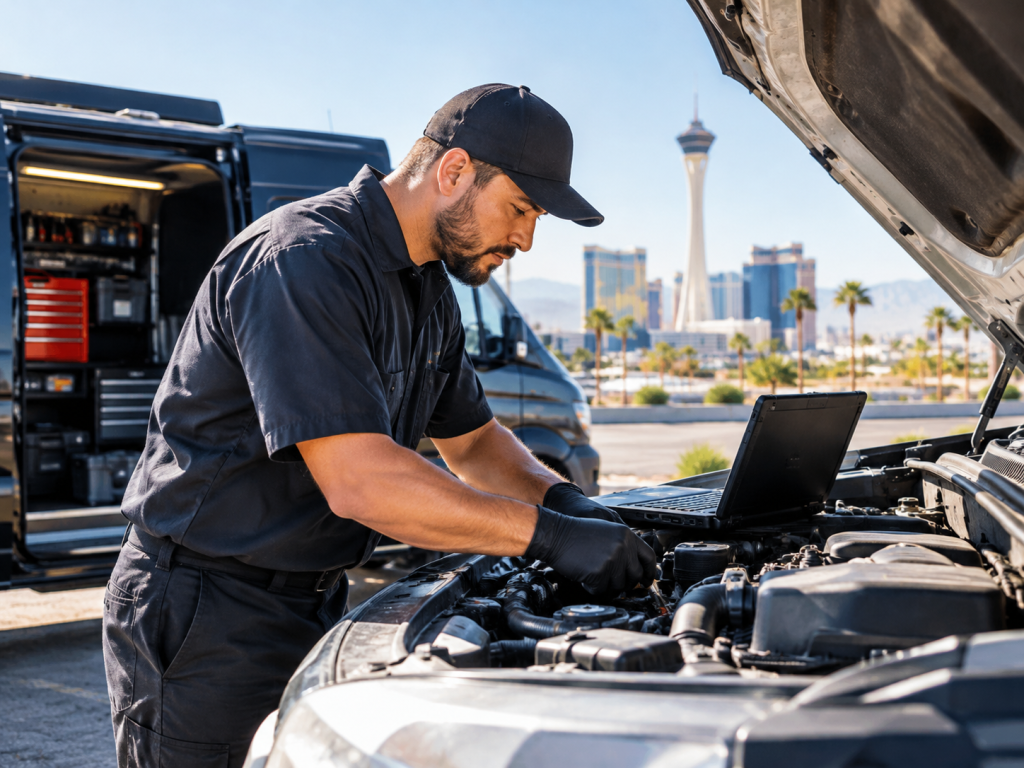
Finding time for a shop visit before a trip can be difficult. A mobile mechanic can come to your home or workplace in the Denver area, inspect the key systems on this checklist, and handle many common services on the spot, such as battery testing and replacement, brake inspections, fluid checks, oil changes, and belt and hose inspections. That keeps your prep simple and gives you time to pack. Some jobs may need the equipment of a full shop, and a trustworthy technician will tell you honestly when that is the case. When you book, share your route and travel dates so the technician knows what to focus on.
Your Quick Pre Trip Summary
If you only remember a handful of things, make them these: have the brakes checked, make sure the cooling system is healthy, test the battery, inspect the tires and the spare, top off the fluids, replace tired wipers, and pack an emergency kit. Those steps cover the most common causes of trouble on mountain drives and can make your trip safer and far more relaxing.
To learn more about our services, visit our homepage. If you would like your car inspected before heading into the Rockies, reach out through our contact us page and we will come to you anywhere in the Denver area.